A small Indian kitchen can quickly become crowded with steel utensils, pressure cookers, spice boxes, grocery containers and everyday cooking tools. When everything is kept in the wrong place, even preparing a simple meal can feel difficult.
The good news is that you do not need a large modular kitchen or expensive storage products to keep things organised.
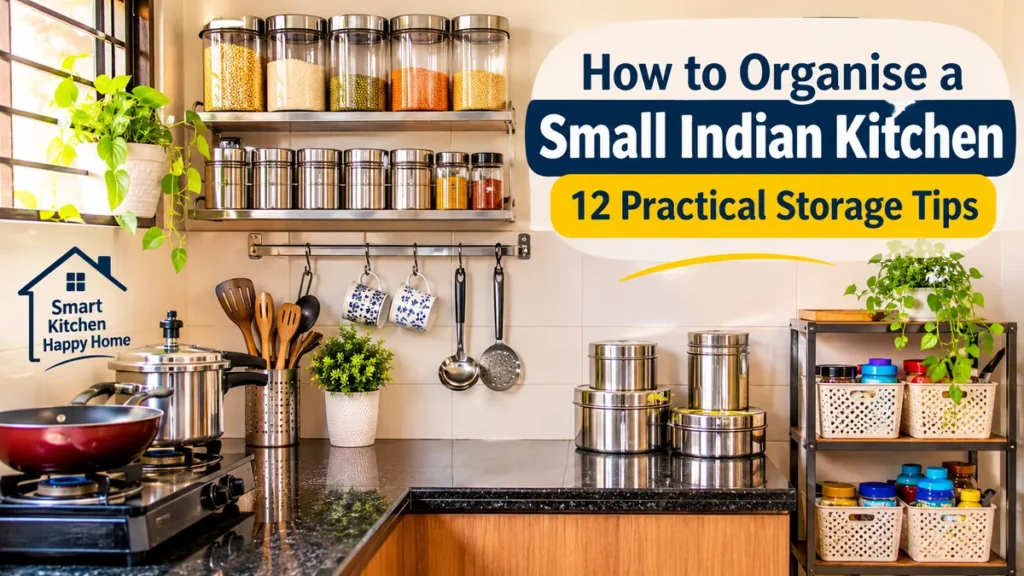
How to Organise a Small Indian Kitchen
The easiest way to organise a small Indian kitchen is to remove unnecessary items, divide the available space into useful zones, keep daily-use utensils within easy reach and use shelves or organisers wherever needed.
Whether you live in a small flat, a rented house or a home with limited kitchen cabinets, these 12 practical tips can help you create a cleaner and more comfortable cooking space.
1. Remove Items You No Longer Use
Before buying new kitchen organisers, check what you already have.
Many Indian kitchens have extra steel plates, old plastic containers, unused bottles, broken kitchen tools and duplicate utensils taking up valuable space.
Start by removing everything from one shelf or drawer.
Divide the items into three groups:
- Daily-use items: Things you use regularly, such as a pressure cooker, tawa, kadai and masala dabba.
- Occasional-use items: Large serving bowls, extra utensils and festival cooking equipment.
- Unnecessary items: Broken tools, damaged containers and things you no longer need.
Keep everyday items in easy-to-reach places. Store occasional-use items separately.
Check food expiry dates before putting grocery packets back on the shelves.
Quick Tip: Start with just one cabinet. Organising the entire kitchen at once can feel overwhelming.
2. Divide Your Kitchen into Useful Zones
One of the simplest ways to organise a small Indian kitchen is to create different areas for different tasks.
You do not need separate rooms or large countertops to do this.
Try dividing your kitchen into four useful zones.
Cooking Zone
Keep the items you regularly need while cooking close to the stove.
These may include:
- Tawa and kadai
- Pressure cooker
- Cooking spoons
- Everyday spices
- Cooking oil
Keep flammable items and plastic containers away from the heat.
Preparation Zone
Choose a small section of your countertop for cutting vegetables, preparing dough and mixing ingredients.
Keep a chopping board and commonly used preparation tools nearby.
Washing Zone
Keep dishwashing liquid, scrubbers and cleaning cloths near the sink.
Avoid leaving too many cleaning products on the countertop.
Grocery Storage Zone
Use a cabinet or shelf for atta, rice, dal, poha, sugar and other dry groceries.
Keeping similar items together makes them easier to find.
Why this works: You spend less time searching for things and can complete everyday cooking tasks more comfortably.
3. Keep Everyday Steel Utensils Within Easy Reach
Steel utensils are common in Indian homes because they are useful for everyday cooking and serving.
However, storing multiple plates, bowls, lids, pans and cooking vessels in a small kitchen can be challenging.
Here are some simple ways to organise them.
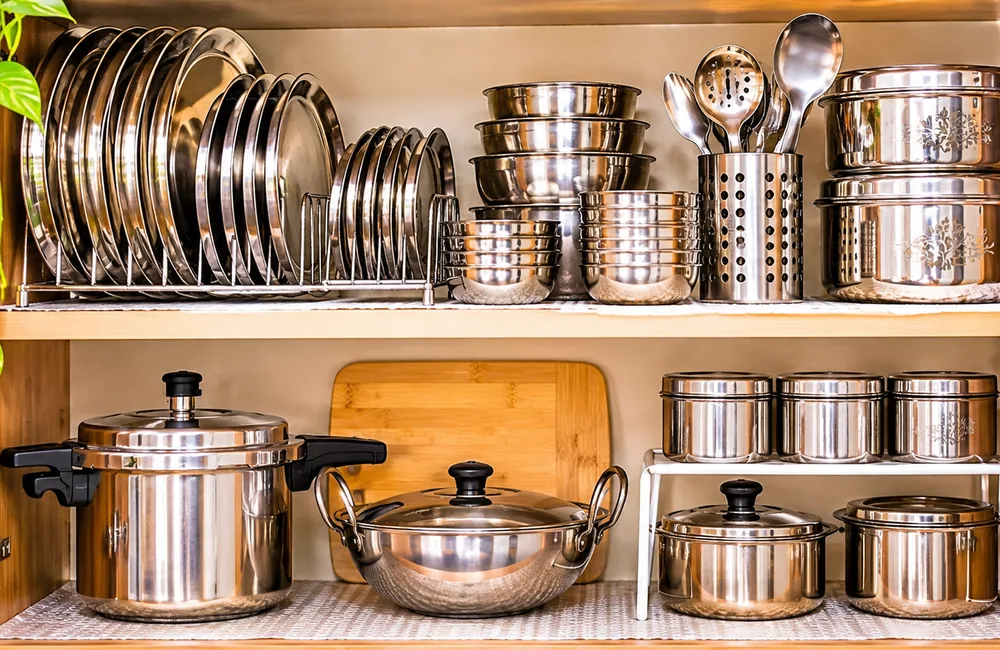
Store Plates Vertically
Instead of keeping all steel plates in one large stack, consider using a suitable plate stand or divider.
This can make individual plates easier to remove.
Keep Bowls Together
Arrange similar-sized katoris and bowls together.
Stack only those items that fit safely without becoming unstable.
Organise Cookware Lids
Pressure cooker lids, kadai lids and pan lids can take up unnecessary space.
A suitable lid organiser may help keep them together.
Store Heavy Utensils on Lower Shelves
Keep heavy pressure cookers, large kadais and other bulky cookware on strong, lower shelves.
This reduces the need to lift heavy items from above your head.
Practical Tip: Keep the tawa and kadai you use most often close to your cooking area. Store less frequently used cookware separately.
4. Use Vertical Space with Shelves and Racks
When floor and countertop space is limited, look at the unused space above your existing shelves.
Vertical storage can help you make better use of a small kitchen.
Some useful options include:
- Wall-mounted shelves
- Shelf risers
- Suitable hanging utensil rails
- Under-shelf baskets
- Freestanding storage racks
For example, if a cabinet has a large empty gap above a row of cups, a shelf riser may create another level for lightweight items.
You can also use suitable wall hooks for lightweight kitchen tools, provided the hooks are installed securely.
Avoid placing heavy cookware on weak shelves or temporary adhesive hooks.
Important: Always check the dimensions and weight capacity of a shelf or rack before using it.
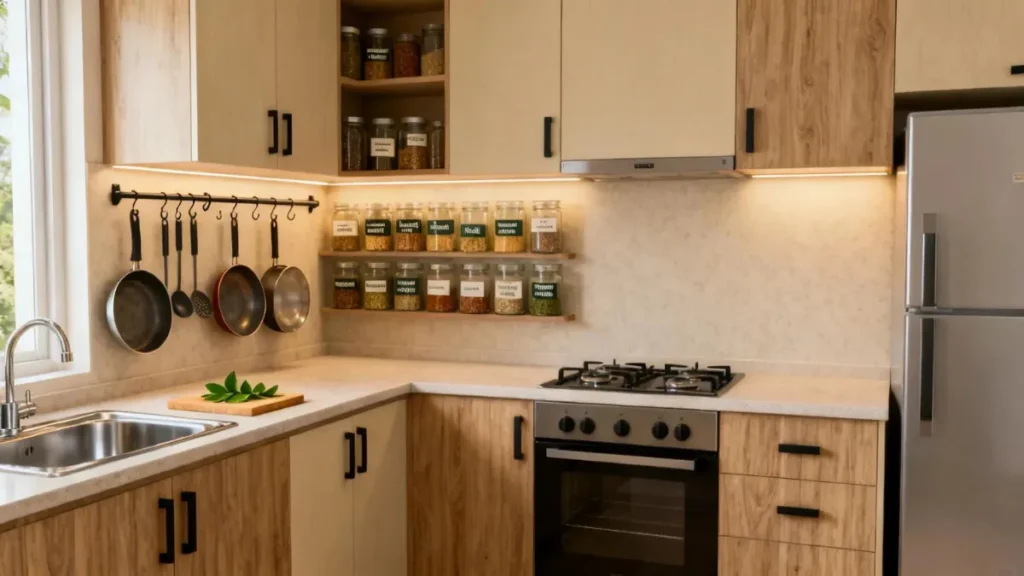
5. Organise Spices Near Your Cooking Area
Indian cooking often requires several spices, including haldi, jeera, dhania powder, red chilli powder, garam masala and mustard seeds.
When spice packets and containers are scattered around the kitchen, cooking becomes less convenient.
A simple spice organisation system can help.
Use a Masala Dabba for Everyday Spices
A traditional masala dabba is useful for keeping frequently used spices together.
Choose a suitable place where you can reach it comfortably while cooking, but keep it away from direct heat and moisture.
Label Your Spice Containers
If you use separate jars, label them clearly.
This is especially helpful when several spices look similar.
Store Extra Spices Separately
Keep refill packets in properly closed containers or their suitable original packaging.
Store them in a cool, dry place according to the product’s storage instructions.
Avoid keeping spices directly beside a hot stove or in a damp cabinet.
Quick Tip: You do not need dozens of matching spice jars. A practical arrangement using your existing containers can work just as well.
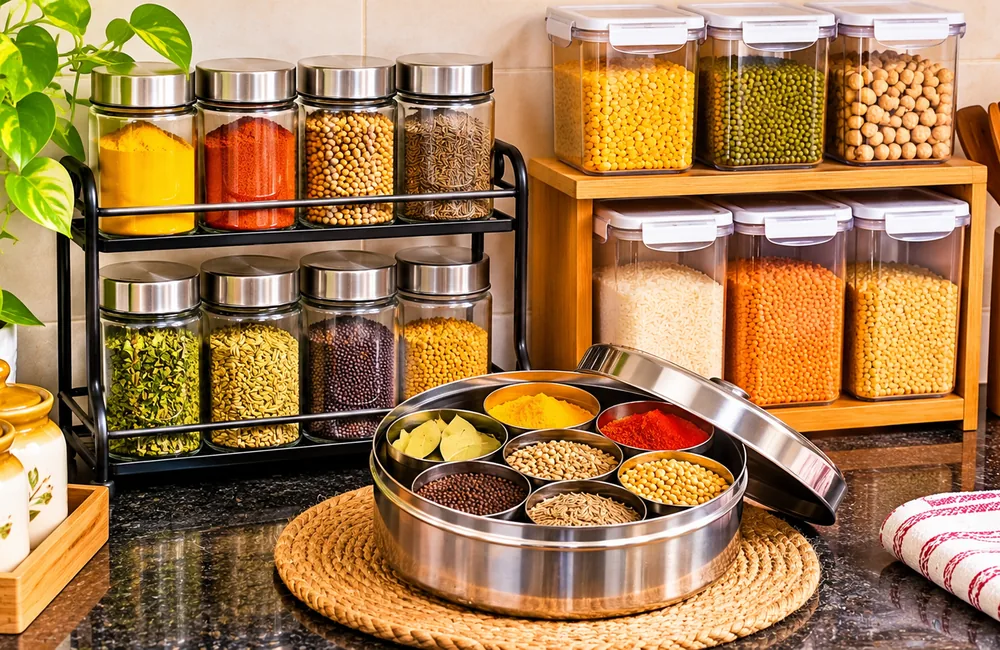
If you want to organise your masala dabba, spice jars and refill packets more efficiently, explore our detailed guide on Indian kitchen spice storage ideas for practical and budget-friendly solutions.
6. Store Atta, Rice, Dal and Groceries Properly
Grocery storage is another important part of small Indian kitchen organisation.
Large packets of atta, rice, dal, sugar and poha can quickly fill kitchen cabinets.
Start by grouping similar food items together.
For example:
- Rice, atta and other grains
- Different types of dal
- Breakfast items such as poha and oats
- Sugar, tea and coffee
- Extra spice packets
Use clean, dry, food-safe containers where appropriate.
Choose container sizes based on the amount of groceries you normally purchase and the available shelf space.
Avoid Buying Containers Without Measuring
A large storage container may look attractive online but might not fit inside your cabinet.
Measure the available width, depth and height before purchasing anything.
Check Older Groceries First
When adding newly purchased groceries, check the dates and condition of older stock.
Use suitable older items first, while following expiry dates and storage instructions.
Keep dry groceries protected from moisture and pests.
Practical Tip: Labels showing the food name and purchase or opening date can make grocery management easier.
7. Keep Your Kitchen Countertop Clutter-Free
A crowded countertop can make even a reasonably sized kitchen feel small.
Try keeping only the things you use regularly on your kitchen counter.
For example, you may need space for:
- A mixer grinder
- A small utensil holder
- Frequently used cooking ingredients
- A chopping board during food preparation
Move rarely used appliances and extra containers into suitable storage spaces.
Do not place items so close to the stove that they create a fire risk.
Create a Clear Preparation Area
Try to keep one section of the countertop available for cutting vegetables, preparing roti dough and serving food.
The size of this area will depend on your kitchen layout.
Even a small, clear surface can make everyday tasks easier.
Quick Tip: After cooking, return utensils and containers to their assigned places instead of leaving everything on the counter.
8. Make Better Use of Kitchen Corners
Kitchen corners are often difficult to use properly.
You may have a corner cabinet that is too deep or a small countertop corner where items become crowded.
Before buying a corner organiser, check whether rearranging existing items can solve the problem.
For example, you can keep less frequently used containers towards the back of a deep cabinet and daily-use items near the front.
A suitable corner shelf or organiser may help in some kitchens.
However, not every corner needs an additional rack.
Choose a solution based on the available space, accessibility and the weight of the items you want to store.
Practical Tip: Avoid filling every empty corner. Leaving enough space to move and clean is also important.
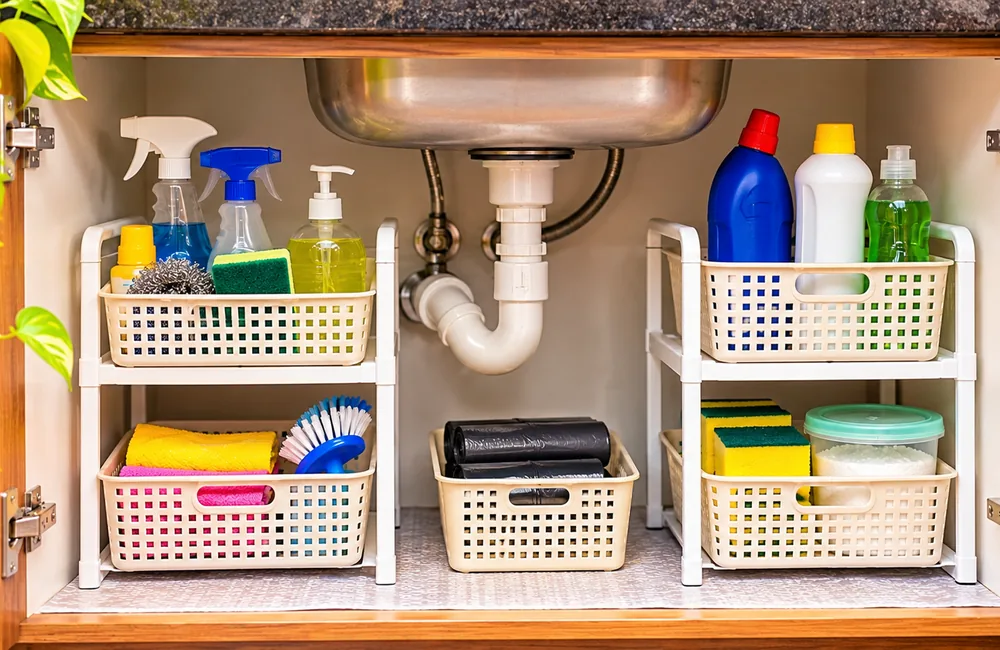
9. Organise the Space Under Your Kitchen Sink
The cabinet under the kitchen sink is often used for storing dishwashing products, cleaning cloths and other cleaning supplies.
However, this area may become damp because of leaks, condensation or water splashes.
Start by checking for moisture or plumbing problems.
Do not cover up an active leak with storage baskets. Fix the problem first.
Keep Cleaning Products Together
Use a suitable basket or tray to organise dishwashing liquid, scrubbers and other cleaning supplies.
Keep cleaning chemicals in their original labelled containers.
Never store cleaning chemicals together with food.
For more guidance on keeping household cleaning products safely away from children, read the CDC’s advice on chemical safety at home.
Avoid Blocking Plumbing
Leave enough space around pipes and fittings so that leaks can be noticed and repairs can be carried out.
Keep Dangerous Products Away from Children
If children can access the kitchen, store hazardous cleaning products securely and out of their reach.
Quick Tip: A removable, moisture-resistant basket can make cleaning the under-sink area easier.
10. How to Organise a Small Indian Kitchen Without New Cabinets
Not every Indian home has a modular kitchen.
Many people live in rented flats or houses where installing new cabinets is expensive or not allowed.
Fortunately, you can organise a small kitchen without making permanent changes.
Consider these options:
- Freestanding storage racks
- Existing shelves with suitable dividers
- Stackable containers
- Countertop utensil holders
- Lightweight removable organisers
- Baskets for grouping similar items
Choose products that are stable and suitable for the available space.
If you live in a rented home, check your rental conditions before drilling holes or installing permanent fixtures.
Avoid hanging heavy utensils from removable hooks unless their suitability and load capacity are confirmed.
Budget Tip: Reuse clean, suitable containers and rearrange your existing shelves before spending money on new storage products.
11. Choose Kitchen Organisers Only After Measuring Space
Kitchen organisers can be helpful, but buying the wrong size may create more problems.
Before purchasing a shelf riser, basket, rack or container, take three basic measurements.
| Measurement | What to Check |
|---|---|
| Width | Available space from left to right |
| Depth | Available space from front to back |
| Height | Clear vertical space, including room to remove items |
Also check whether cabinet doors and drawers can open properly after installing the organiser.
For wall-mounted products, consider the wall type, installation method and supported weight.
Which Storage Solution Should You Choose?
| Kitchen Problem | Possible Storage Solution | What to Check |
|---|---|---|
| Too many steel plates | Plate stand or shelf divider | Stability and dimensions |
| Scattered masala jars | Spice rack or masala dabba | Capacity and placement |
| Limited cabinet space | Shelf riser | Height and weight capacity |
| Crowded countertop | Suitable wall organiser | Installation and safety |
| Under-sink clutter | Moisture-resistant basket | Plumbing clearance |
| No modular cabinets | Freestanding storage rack | Stability and floor space |
Remember that an organiser is useful only when it solves a real storage problem.
Buying Tip: Make a list of the items you need to store before choosing a product.
12. Follow a Simple Daily Kitchen Organisation Routine
Organising your kitchen once is helpful, but keeping it organised requires regular attention.
A simple routine can prevent clutter from building up again.
After Cooking
- Return spices to their places.
- Put away clean utensils.
- Wipe the countertop.
- Keep the sink area tidy.
Once a Week
- Check grocery packets and containers.
- Clean shelves that need attention.
- Remove unnecessary packaging.
- Return misplaced items to their assigned areas.
Once a Month
Review whether your storage system is working.
If you constantly struggle to reach something, consider changing its position.
Quick Tip: A short daily kitchen reset is often easier than waiting until the entire kitchen becomes cluttered.
Kitchen Organisation Ideas for Different Budgets
You do not need to buy several products to improve your kitchen.
Start with the storage options you already have.
Start with Things You Already Own
You can often improve organisation by:
- Grouping similar utensils together.
- Reusing suitable, clean food-storage containers.
- Moving rarely used items to less accessible shelves.
- Keeping frequently used tools closer to the cooking area.
- Removing unnecessary packaging.
These changes may be enough to make a noticeable difference.
When Is Buying an Organiser Worth It?
Consider buying an organiser when you have identified a specific problem that rearranging existing items cannot solve.
For example, a plate stand may be useful if stacked steel plates are difficult to remove.
A shelf riser may help when a cabinet has unused vertical space.
Choose products based on size, materials, stability, cleaning requirements and your actual needs.
Avoid purchasing kitchen gadgets simply because they look attractive in advertisements.
Common Small Kitchen Organisation Mistakes
Even useful storage ideas can become inconvenient when applied incorrectly.
Here are some mistakes to avoid.
1. Buying organisers before measuring: A rack that does not fit properly wastes space and money.
2. Keeping everything on the countertop: Too many items leave little room for food preparation.
3. Overloading shelves: Heavy cookware needs strong, suitable storage.
4. Storing daily-use items too far away: Frequently used utensils should be easy to reach.
5. Ignoring moisture: Damp cabinets can damage stored items and create hygiene problems.
6. Buying too many containers: Extra containers themselves can become clutter.
Focus on making your kitchen easier to use, not simply filling it with storage products.
Quick Small Kitchen Organisation Checklist
Use this checklist when organising your kitchen.
- Remove broken, expired and unnecessary items.
- Keep daily-use utensils within easy reach.
- Create separate cooking, washing and grocery zones.
- Arrange spices in a convenient, dry location.
- Group atta, rice, dal and other groceries.
- Keep one countertop area clear for food preparation.
- Use vertical storage only where suitable.
- Check the under-sink area for moisture and leaks.
- Measure cabinets before buying organisers.
- Keep heavy cookware on strong, lower shelves.
- Return items to their places after cooking.
- Review your kitchen organisation regularly.
You can complete these tasks gradually instead of trying to reorganise everything in one day.
Frequently Asked Questions
1. How can I organise a small Indian kitchen without cabinets?
Use stable freestanding shelves, suitable storage baskets, stackable containers and existing countertop space carefully. Keep daily-use utensils together and store rarely used items separately. Avoid overcrowding your cooking area.
2. How do I store steel utensils in a small kitchen?
Group similar steel utensils together. Use a suitable plate stand for thalis, stack compatible katoris carefully and keep heavy cookware on lower shelves. A lid organiser may also help reduce clutter.
3. How can I organise my kitchen on a low budget?
Start by removing unnecessary items and rearranging existing shelves. Reuse clean, food-safe containers where appropriate. Buy new organisers only when they solve a specific storage problem.
4. What is the best way to organise Indian spices?
Keep frequently used spices together in a masala dabba or clearly labelled jars. Store extra spice packets in a cool, dry place away from direct heat and moisture. Arrange the containers so you can find each spice easily.
5. Which kitchen organisers are useful for small spaces?
Depending on your kitchen layout, useful options may include plate stands, spice racks, shelf risers, lid organisers and storage baskets. Measure the available space and check product suitability before buying.
Final Thoughts
Learning how to organise a small Indian kitchen does not have to be expensive or complicated.
Start by removing unnecessary items, keeping everyday utensils within easy reach and making better use of your existing shelves.
Small changes, such as organising spices, clearing the countertop and storing groceries properly, can make everyday cooking more convenient.
Most importantly, choose storage solutions that suit your kitchen rather than trying to copy a large modular kitchen.
A well-organised kitchen is not about having more storage products. It is about making the best use of the space you already have.