Spices are an essential part of every Indian kitchen. From haldi and jeera to red chilli powder and garam masala, we use different spices to prepare delicious meals every day.
However, organising these spices can be challenging, especially in a small kitchen with limited cabinet and counter space.
Have you ever opened your kitchen cabinet to find a particular masala, only to discover several scattered packets and unlabelled containers? This common problem can make everyday cooking unnecessarily difficult.
The good news is that you do not need an expensive modular kitchen to solve it.
With the right Indian kitchen spice storage ideas, you can organise your masalas, save valuable space and make everyday cooking more convenient.
This guide covers 12 practical storage solutions, suitable containers, common mistakes and budget-friendly organisation tips for Indian households.
Why Proper Spice Storage Matters in Indian Kitchens
A well-organised spice collection offers more than just a neat kitchen appearance.
- Saves space: Makes better use of shelves, cabinets and drawers.
- Simplifies cooking: Helps you find the right masala quickly.
- Maintains spice quality: Suitable storage helps protect spices from moisture, light and excessive heat.
- Reduces unnecessary purchases: Makes it easier to check your existing stock before shopping.
- Improves cleanliness: Keeps scattered packets and containers under control.
The key is to create a storage system that suits your available space, cooking habits and household budget.
12 Smart Indian Kitchen Spice Storage Ideas
Here are 12 practical ways to organise spices without making major changes to your kitchen.
1. Use a Traditional Stainless Steel Masala Dabba
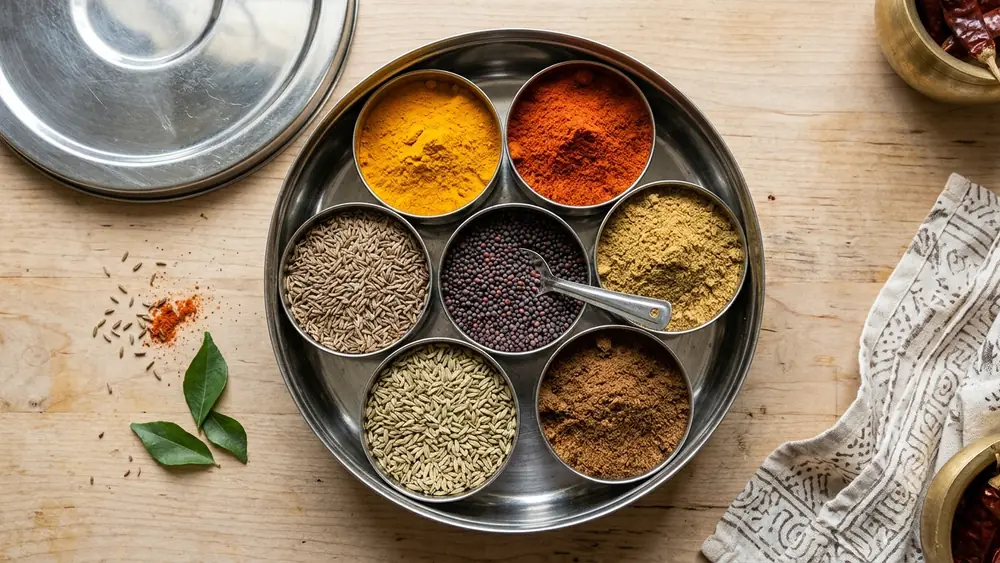
A stainless steel masala dabba is one of the most practical storage solutions for Indian households.
It usually contains several small compartments inside a larger round container. These compartments are ideal for frequently used spices such as turmeric, cumin, coriander powder, mustard seeds and red chilli powder.
Instead of opening several containers while cooking, you can access your essential masalas from one place.
Choose a masala dabba with a well-fitting outer lid. If its inner compartments are open, use it for small quantities of regularly used spices rather than long-term storage.
Practical tip: Refill your masala dabba in small quantities and keep the remaining stock in separate airtight containers.
2. Store Everyday Spices in Airtight Containers
Airtight spice containers help limit exposure to moisture and air while keeping your kitchen organised.
Choose containers according to the quantity of spices your family normally uses. Small jars are suitable for spices such as garam masala, black pepper and cardamom, while larger containers may be useful for frequently used coriander or chilli powder.
Matching containers can also make better use of shelf space.
Look for lids that close securely and containers that are easy to wash and refill.
Practical tip: Avoid buying oversized jars for small quantities of spices. Measure your cabinet before selecting a container set.
3. Arrange Spice Jars on a Wall-Mounted Rack
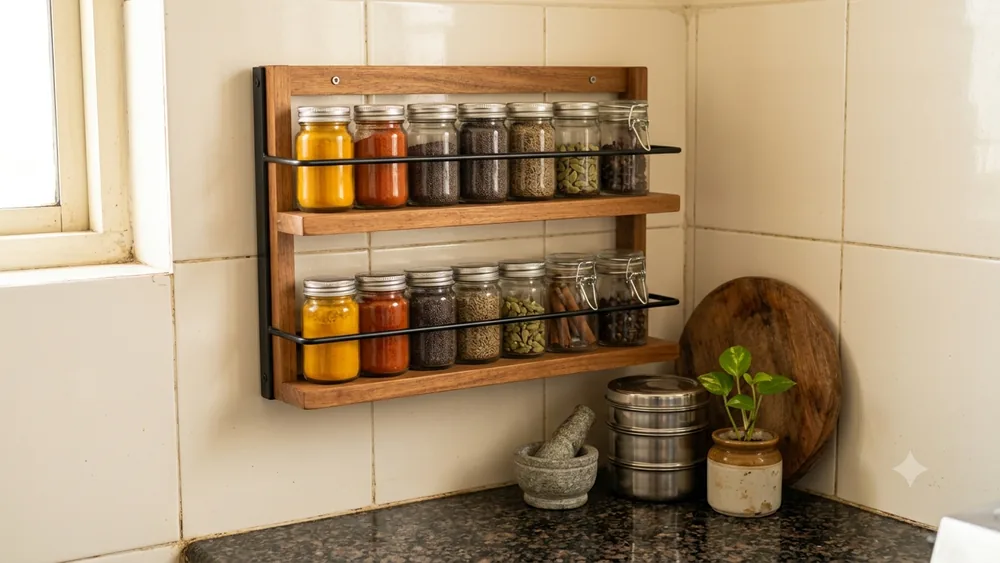
Wall-mounted spice racks are useful for small kitchens where counter space is limited.
A compact two-tier or three-tier rack can hold several spice jars without occupying your cooking platform.
Choose an available wall away from the gas stove, sink and direct sunlight. Make sure the rack is securely installed and suitable for the weight of your containers.
A rack with a front guard may help prevent jars from falling.
Practical tip: Measure the height and width of your available wall space before buying a rack. Also check the diameter of your spice jars.
4. Use Drawer Organisers for Small Spice Containers
An unused kitchen drawer can become a convenient spice storage area.
Drawer organisers help keep containers in separate rows and prevent them from moving around when the drawer is opened.
Place frequently used spices in the front row and occasionally used spices towards the back.
If your containers are stored upright, add labels to their lids so you can identify each spice without removing it.
Practical tip: Check the drawer’s internal height, width and depth before purchasing an organiser. Make sure the drawer closes without touching the containers.
5. Label Every Spice Jar Clearly
Labelling is one of the simplest and most affordable kitchen organisation methods.
Many powdered spices look similar, particularly when stored in matching stainless steel containers.
Clear labels help you identify the correct masala immediately.
Here are some examples of bilingual spice labels:
- Haldi — Turmeric
- Lal Mirch — Red Chilli Powder
- Dhania — Coriander Powder
- Jeera — Cumin
- Rai — Mustard Seeds
- Saunf — Fennel Seeds
- Garam Masala — Mixed Spice Blend
You can also add the purchase or refill date to help you use older stock first.
Practical tip: Use waterproof labels where possible. Place them on the front of shelf containers and on the lids of drawer containers.
6. Use Stackable Containers to Save Cabinet Space
Stackable containers help you make better use of cabinet height.
Instead of spreading spice jars across an entire shelf, arrange compatible containers vertically.
Choose containers specifically designed for stable stacking. Flat lids and secure bases are useful features.
Avoid creating tall stacks of heavy glass jars, as they may become difficult to access safely.
Practical tip: Keep frequently used spices in the most accessible layer and heavier containers on lower shelves.
7. Keep Frequently Used Masalas Within Easy Reach
Not every spice needs to occupy your main cooking area.
Separate your spices according to how often you use them.
Daily-use spices may include turmeric, red chilli powder, cumin, coriander powder and mustard seeds.
Occasionally used spices may include star anise, nutmeg, cinnamon and speciality masala blends.
Keep your everyday spices in an accessible masala dabba or small tray. Store the remaining spices in a separate cabinet section.
Practical tip: Keep your daily-use spice collection within comfortable reach but away from open flames and excessive cooking heat.
8. Organise Spice Packets in Separate Baskets
Spice packets and refill pouches can easily create clutter inside kitchen cabinets.
Small storage baskets offer a simple solution.
Use separate baskets for whole spices, powdered spices and unopened refill packets.
Choose baskets that are easy to remove, clean and label.
Keep opened packets properly sealed or transfer their contents into suitable airtight containers.
Practical tip: Check your refill basket before shopping for groceries to avoid purchasing spices you already have.
9. Try a Rotating Spice Organiser
A rotating spice organiser, also known as a lazy Susan, is useful for deeper kitchen cabinets.
Instead of moving several jars to reach the containers at the back, you can rotate the organiser to access the required spice.
Choose a model with a stable base and enough space for your containers.
This solution works best in cabinets where the organiser can rotate freely.
Practical tip: Cut a paper circle matching the organiser’s diameter and place it inside your cabinet to check whether it will fit before purchasing.
10. Use Cabinet Door Space Carefully
The inside of a kitchen cabinet door may provide additional storage space.
A slim door-mounted organiser can hold small, lightweight spice containers without using the main shelf area.
However, not every cabinet door is suitable for additional weight.
Check the door material, hinges, available clearance and the organiser’s recommended weight limit.
Avoid placing heavy glass jars on weak cabinet doors.
Practical tip: Follow the manufacturer’s installation instructions and check that the cabinet door closes properly after installation.
11. Keep Bulk Spices Separate from Daily-Use Spices
Many Indian households purchase larger spice packets to reduce frequent shopping.
Instead of keeping the entire stock near your cooking area, divide it into daily-use and reserve quantities.
Store reserve spices in labelled, properly sealed containers inside a cool, dry and dark cabinet.
Use older stock before opening newer packets.
Before refilling a container, check the remaining spices and clean the container when necessary.
Practical tip: Purchase quantities that your household can reasonably use while the spices retain their flavour and aroma.
12. Create a Simple Budget-Friendly Spice Storage System
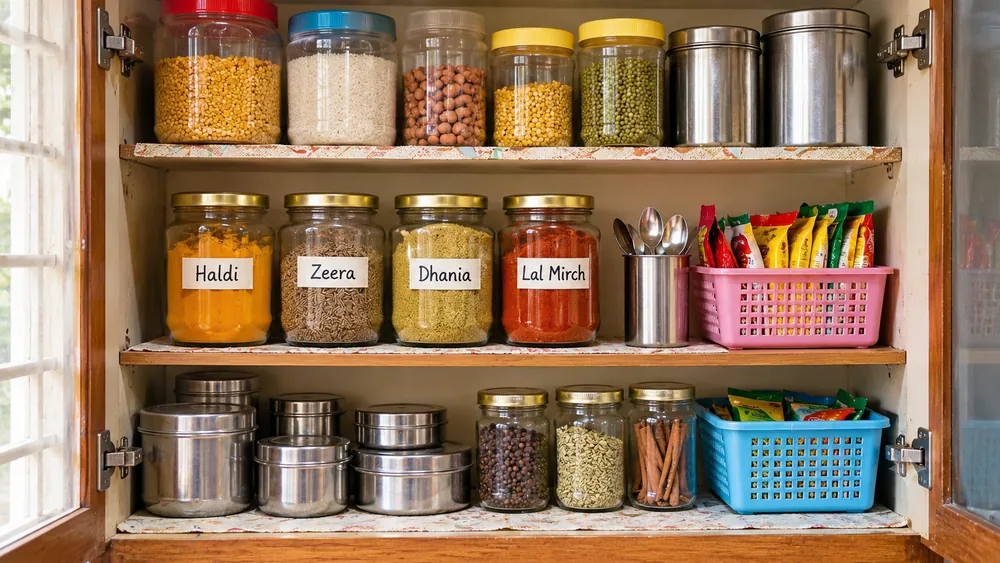
You do not need to purchase expensive accessories to organise your masalas.
Start by checking the storage items already available at home.
Suitable reusable food jars, unused trays and small baskets can become practical spice organisers.
Wash and completely dry reusable containers before filling them.
Arrange similar items together and add simple handwritten labels.
Once your existing spice collection is organised, you can decide whether additional storage accessories are actually necessary.
Practical tip: Focus on functionality before appearance. A simple, accessible storage system is more useful than an expensive organiser that does not fit your kitchen.
Quick Comparison of Indian Kitchen Spice Storage Solutions
Different storage solutions work better for different kitchen layouts. Use this comparison to identify an option suitable for your needs.
| Storage Solution | Best For | Space Needed | Relative Cost |
|---|---|---|---|
| Masala Dabba | Daily-use spices | Low | Low |
| Airtight Jars | Maintaining spice quality | Low to Medium | Low to Medium |
| Wall-Mounted Rack | Limited counter space | Wall space | Medium |
| Drawer Organiser | Hidden storage | Drawer space | Medium |
| Stackable Containers | Small cabinets | Low | Low to Medium |
| Storage Baskets | Spice packets | Medium | Low |
| Rotating Organiser | Deep cabinets | Medium | Medium |
| Reused Food Jars | Budget storage | Low to Medium | Very Low |
Space and cost categories are general estimates. Actual requirements and prices depend on product size, material, brand and kitchen layout.
For most small Indian kitchens, a combination of a masala dabba, airtight jars and a small refill basket is a practical starting point.
Best Containers for Storing Indian Spices
Choosing suitable containers is an important part of spice organisation. Here are three commonly available options.
Stainless Steel Containers
Stainless steel containers are durable, resistant to breakage and widely used in Indian households.
Opaque steel containers also help protect spices from light.
However, their contents are not visible from outside, making clear labels particularly useful.
They are a practical choice for everyday masalas.
Glass Containers
Glass jars allow you to identify spices easily and can create a neat appearance inside cabinets.
They are easy to clean but are heavier and more fragile than many other storage options.
Clear glass jars should be kept away from direct sunlight.
They work well on stable shelves where they are unlikely to fall.
Food-Grade Plastic Containers
Food-grade plastic containers are generally lightweight and available in various shapes and sizes.
They can be useful for storing spice packets and organising lightweight kitchen supplies.
Choose containers intended for food storage and follow the manufacturer’s usage and cleaning instructions.
Replace damaged or cracked containers.
Which Container Is Best for Your Kitchen?
There is no single container material suitable for every household.
Choose stainless steel for durability, glass for visibility or suitable food-grade plastic for lightweight storage.
Regardless of the material, prioritise clean, dry containers with secure lids.
Common Spice Storage Mistakes to Avoid
Proper storage conditions are important for maintaining food quality. For general guidance on storing foods safely and maintaining their quality, you can refer to the Food Storage Guide from North Dakota State University Extension. For everyday spices, it is also practical to use clean, dry containers and avoid unnecessary exposure to heat and moisture.
Here are some common spice storage mistakes to avoid:
- Keeping spices beside the gas stove: Excessive heat and steam may affect their quality.
- Using wet spoons: Moisture can cause clumping and may encourage spoilage.
- Leaving containers open: Close lids properly after every use.
- Exposing clear jars to sunlight: Light may gradually affect the colour and quality of some spices.
- Buying excessive quantities: Unused spices may lose flavour over time.
- Ignoring old stock: Check stored spices regularly and discard those showing mould or other signs of spoilage.
Avoiding these mistakes can help you maintain a cleaner and more practical spice storage system.
How to Organise Spices in a Small Indian Kitchen on a Budget
You can improve your spice storage without spending much money by following this simple process.
Step 1: Empty your spice storage area.
Remove all containers and packets from your cabinets.
Step 2: Check your existing stock.
Identify duplicate packets, damaged containers and spices that are no longer suitable for use.
Step 3: Divide spices into three groups.
Separate daily-use masalas, occasionally used spices and unopened refill packets.
Step 4: Clean your storage area.
Wipe the shelves and allow them to dry completely.
Step 5: Arrange your containers.
Use your existing masala dabba, jars, trays and baskets to create separate storage zones.
Step 6: Add clear labels.
Label each container and check whether every frequently used spice is easy to access.
This simple process can help you create an organised spice collection without purchasing unnecessary kitchen accessories.
If you also struggle with limited space for utensils, groceries and other kitchen items, read our detailed guide on How to Organise a Small Indian Kitchen: 12 Practical Storage Tips.
Frequently Asked Questions About Indian Kitchen Spice Storage
1. What is the best way to store masalas in an Indian kitchen?
Keep frequently used masalas in a suitable masala dabba or airtight containers. Store additional spices separately in a cool, dry and dark cabinet away from excessive heat and moisture.
2. How can I organise spices in a very small kitchen?
Use compact containers, stackable jars, drawer organisers and suitable wall-mounted racks. Separate daily-use spices from refill packets to reduce clutter.
3. Are glass jars better than steel containers for spices?
Both have advantages. Glass jars offer visibility, while stainless steel containers provide durability and protection from light. Choose according to your kitchen layout and storage preferences.
4. Can I store spice containers above the gas stove?
It is better to avoid this location because heat and steam may affect spice quality. Choose an accessible storage area away from the cooking flame.
5. How often should I clean my spice containers?
Wipe the outside regularly and clean the inside when necessary, particularly before replacing old contents. Always allow washed containers to dry completely before refilling them.
Conclusion
Organising your spices does not require an expensive modular kitchen or a large collection of storage accessories.
The most effective Indian kitchen spice storage ideas are those that suit your available space, cooking habits and budget.
Start with a traditional masala dabba, suitable containers and clearly labelled storage baskets. Separate your everyday spices from reserve stock and make better use of available cabinet space.
By making a few practical changes, you can create a cleaner, more organised kitchen that makes everyday cooking easier.